
Why I’m snorting at your "Best Software" list
And what I think you should do instead.


I was recently lurking on the blog section of a project management brand named after the bluest day of the week and it launched my eyebrows right up to my hairline.
You see, a majority of the top posts on their blog is just “Best [Category] Software” listicles.
You know the drill.
These are the mildy self-aggrandizing articles that list the brand and all its competitors in the market.
#1 is the brand whose website the article lives on, of course.
#2 through #10 are competitors with convenient cons mentioned for each — features they lack that surprisingly, #1 somehow has in spades.
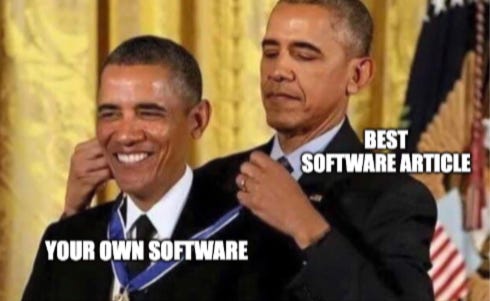
I’m not above this, mind.
I have written my fair share of articles declaring the brand I lead Content for simply the bestest of the bestest/everyone and their mom should use it/your head on a platter if not, yada yada.
In fact, as recently as two years ago, one of these “Best [Category] Software” articles was the largest source of organic leads for a brand I worked for.
So why am I turning my nose up now?
The conflict of interest
If I were buying a camera1 and the Best Beginner-friendly Cameras of 2025 list was written by Nikon, and Nikon was ranked #1, I would keep searching. Instantly.

As a buyer, I clearly want an objective review.
As a marketer, I want the lead.
As a millennial writer, I find these articles inherently…cringe.
And therein lies the paradox.
No matter how research-driven these articles are, I find it hard to trust them when the brand smacks its behind down on #1.
The search + citation trap
I create these articles as a marketer because they unfortunately work.
Firstly, they help with search intent.
When someone types “Best CRM,” they are at the bottom of the funnel. You have to be there.
And as much as I hate them, LLMs cite these articles too.
Our soon-to-be robot overlords salivate over these structured lists. If you aren’t in the “Best of” lists, you don’t exist in the ChatGPT recommendation.
And while I personally never want the tin cans slobbering over my creative work to serve up slop, I unfortunately do need them to read my work’s website to help our ideal customers find us. Oh well.

So how do we stop the self-awarded gold medal approach?
Here are a few options that don’t rake in distrust from your prospects and hopefully also get you ranked/cited everywhere.
Best software, but ranked by use case/scenario
Have you seen how the influencer girlies do it? They never peddle a single haircare product. It’s always “A for beginners to the curly girl routine, B for volume and texture, C for definition..”
Take a page out of their book. Instead of lists declaring "We are #1," change your narrative.
If you are a 1000-person enterprise, use Competitor A.
If you are a solo freelancer, use Competitor B.
If you are a mid-market team that needs X and Y features, we built our tool specifically for you.
This way, even if you lose a lead, it wouldn’t have been relevant to you anyway.
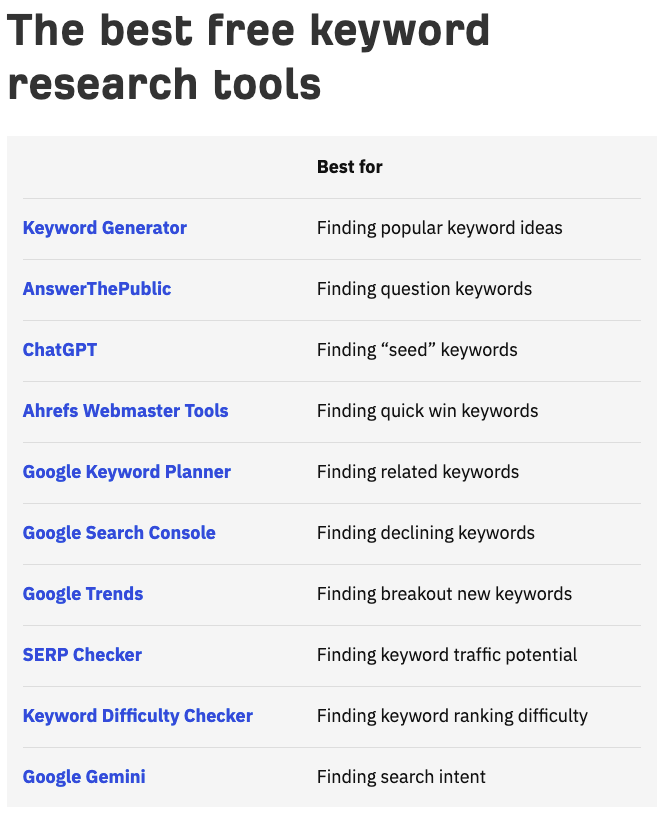
And this approach requires honesty too so you don’t needlessly lump a competitor in a category they don’t even sell to or misrepresent the facts about their software. The software I write for has been targeted in such hit pieces and it was equal parts frustrating and hilarious2.
Social proofed lists
I don’t know if you still read Buzzfeed, but a majority of their editorial calendar is just sourced from Reddit comments, tweets, and Amazon reviews.
You too could structure your listicle entirely with public, professional reviews from Gartner, Capterra, G2, and the likes.
Buzzfeed gets some deserved flak, but pulling from verified and public software review sites isn’t as problematic as profiting off of individual users’ memes on the bird app.
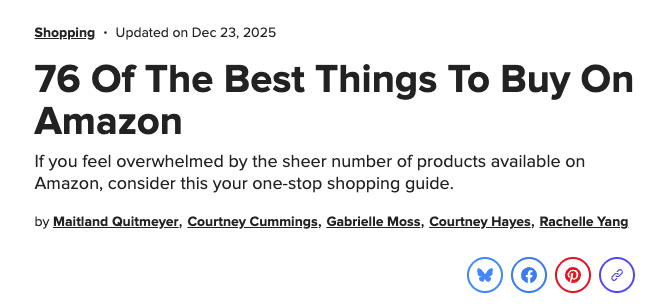
So if you’re actually #1 according to reviewers, you’re only citing them and not declaring it yourself.
Unless, of course, these were paid reviews, which is a whole other can of worms with some review sites (slander for a later article, mayhaps?)
Anyway. Quote the praise your brand received in the article but also include praises your competitors get to build trust. If the lead goes to both companies, may the best software (and Sales team) win, and all that jazz. Your job is still done.
Comparison pages
These are my favorite, non-cringey way of helping your BOFU prospects make a decision.
Why try to rank for the “best” keyword at all when “versus” is right there?
Instead of one giant list, you get to build a whole hub comparing your brand against competitors A, B, and C.
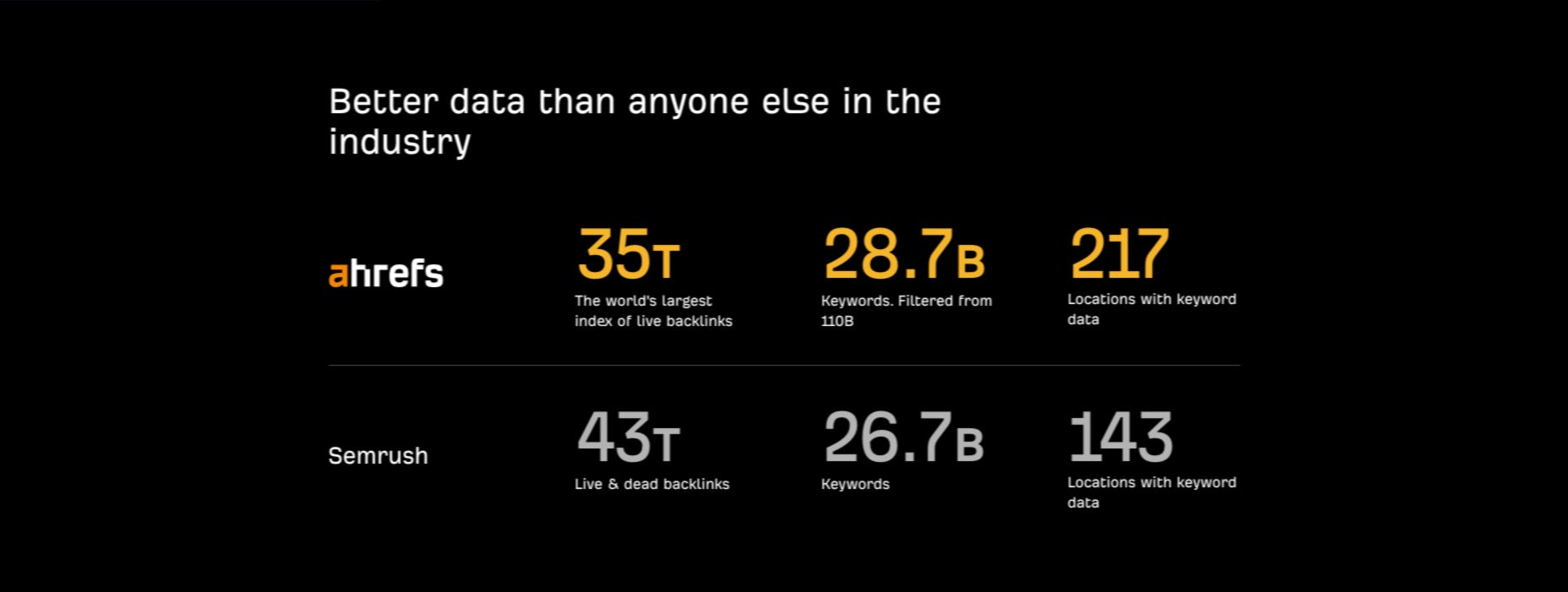
Oh, and also competitor A versus B, A versus C, and all the permutations.
Again, this requires honesty and in-depth research. I think monday.com (the opener may have been mean but I like their work, okayyy?) does this well too, as seen here in this Wrike versus Asana article.
Sometimes you and a competitor may be matched neck to neck in features but maybe they are more suited to enterprise brands from a certain industry, say, while you are not. That is okay to admit.
It only increases your credibility as a brand.
If you have to do a “Best [ Category] Software” list…
Look, I get it. Sometimes, you just have to deploy this playbook. The traffic is too good to ignore. But you can still do it without dishonesty.
A good amount of research should go into writing these lists.
I would once again use the use case approach here instead of plain old pros and cons.
And bring the receipts. What star rating does each tool on the list have on review sites? Can you share a positive and negative review for each software on the list, including your own?
The best way to get your prospects’ trust is by being objective and honest. And dare I say, if your product sucks, just don’t write the article until it gets better.
Side note: I love how Zapier does their listicles. They add a note about how they made the list and even have a whole page with more clarity on selecting apps and FAQs.
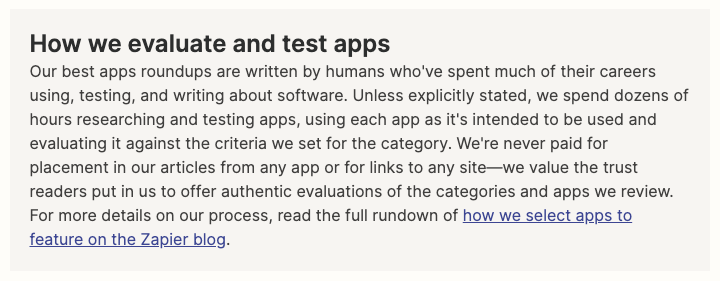
My takeaway here is to be transparent about your methodology too alongside writing such an article so the trust still remains.
The bottom line: Helpfulness > rankings
“Best software” articles may be a necessary evil for the algorithm, but they shouldn’t make a buyer roll their eyes and bounce.
The companies that will win the next era of search (and AI) are those that realize helping their readers make a decision objectively is way more important than ChatGPT calling them #1 alongside its hallucinated content.
How’s that for a first edition?
If you found this article interesting at all, please subscribe so I feel pressured to write the next one.
Much appreciated.
— Shruti
Writer of the #1 Best New Content Marketing ‘Stack to Follow, of course.
I am, in fact, buying a camera. And I’m very lost. Send help.
A competitor recently did a comparison post of their compliance feature versus ours, except they seemed to have either confused or deliberately equated our feature to yet another competitor’s. The whole article was a mess. Fun stuff!